 Hope for humans
Jinfo Blog
7th November 2008
Item
One unexpected outcome of the financial crisis seems to have been a renaissance in the stock exchange trading floor. Ousted with the arrival of automation in the 1980s, the Financial Times has reported http://digbig.com/4xtwe a sharp increase in activity for floor brokers on the New York Stock Exchange, who now account for 10% of volume, up from 4% at the start of the year. With suspicion of computer-based trading of complex financial instruments at an all-time high, one NYSE specialist told the FT that the combination of automated trading with brokers on the floor had recently been an indispensable part of the market in terms of price discovery, aggregation of volume and dampening of volatility. And a trader commented that several trading glitches and erroneous orders going through all-electronic markets in recent times would have been spotted under a system with scope for human intervention. Further hope for humans comes from a symposium on the key issues facing the IT industry, held recently by Gartner. To restore customer confidence, banks will have to redesign their branches to re-engage with customers lately pushed away in the direction of telephone and internet banking, its analysts say. With the help of branch automation, Gartner believes http://digbig.com/4xtwh that banks can engage customers for transactions that add value to the relationship and streamline the purchase of new products and services. If they donât, it warns, there are plenty of competitors â including non-banks looking to enter the financial services market â ready to seize their opportunity to attack the banks and steal their customers. Finally an Economist Intelligence Unit report, Global Disruptors: Steering Through The Storms http://digbig.com/4xtwj finds executives and business leaders citing global shifts in availability of and access to labour and talent as the second most disruptive force facing business at present, with organisational structure and talent management likely to undergo great change. Yet only 25% of respondents to the EIUâs survey said their companies proactively tracked global forces and tried to act before their competitors did. Any trends in business that emphasise the human element have to be good news for business information professionals â if only indirectly. When researching a recent Information World Review article on the effect of the downturn on the information profession http://digbig.com/4xtwp I certainly found senior information managers remarkably upbeat about the prospects for people â albeit with caveats. One suggested that the downturn could see a lot of expensive information products being pulled away from amateur end-users and back to the professional information centre. But another also issued a warning. âWe need to continue to move up the value chain, providing less data and more analysis,â he said. âAre we, as a group of professionals, suitably skilled to do that?â
What's new at Jinfo?
Register for our next Community session:

AI use cases in information management
22nd September 2026
Latest on our YouTube channel: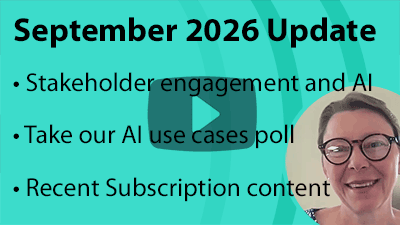
Read on the Blog:
September 2026 update
2nd September 2026
- Take our poll on AI use cases
8th September 2026 - September 2026 update
2nd September 2026 - All recent Subscription content
25th August 2026
- Jinfo Community session (TBC) (Community) 15th December 2026
- Jinfo Community session (TBC) (Community) 19th November 2026
- From AI use cases to implementation (Community) 22nd October 2026
Learn more about the Jinfo Subscription