 How safe is WSJ's SafeHouse?
Jinfo Blog
8th May 2011
Item
With a recently recorded ABC circulation beating every other daily in the United States, the Wall Street Journal is required reading for millions in business. Like any other newspaper it likes a scoop, so in that respect its launch of a standalone whistleblower site should come as no surprise.
But the trouble is that, unlike WikiLeaks and its imitators, the WSJ is no footloose outsider; it’s part of the media establishment, subject to US law. Which is clearly why the terms of use for its new SafeHouse site set out some crucial caveats for would-be leakers.
Technologically it appears to have taken every precaution; it encrypts all incoming files, minimises any technical information it receives that could potentially identify the sender, and recommends ways that senders can further encode their documents or obscure the source of the material. But even with all these safeguards, it acknowledges that it cannot ensure complete anonymity.
Much more concerning, though, is the legal situation; if it enters into a confidential relationship with an informant, the WSJ’s owner Dow Jones will take all available measures to protect their identity – but will nevertheless comply with the law. So if forced to, it reserves the right to disclose information about the informant to law enforcement authorities or other legally entitled third parties.
So that leaves the First Amendment to the US Constitution, protecting freedom of the press. In an article in eContent, published coincidentally just a day before the SafeHouse launch, Kelley Bligh quotes a letter from a group at Columbia University urging President Obama not to pass legislation that would effectively make WikiLeaks’ infamous publication of the US diplomatic cables illegal.
Others disagree, saying that WikiLeaks’ raw disclosure activities and the carefully considered reporting of the conventional press are different things. And the United Kingdom Guardian newspaper, which did publish material from the cables, reminds readers that the WSJ declined an offer from WikiLeaks to do so.
Citing fraud, abuse, pollution and insider trading as examples of wrongdoing that it might be interested in, the WSJ does seem to position itself firmly in the business rather than the political leaks marketplace. But that still leaves a dilemma for the employee with a conscience and a secret to share: seek the protection of an experienced media organisation but risk the alleged wrongdoing never coming to light at all – or trust to the gung-ho WikiLeaks and possibly put your entire career at hazard.
There are new challenges for the corporate information manager too. With both wholesale and retail markets in leaks developing – and (as LiveWire has previously reported) plenty more places than just WikiLeaks to look – due diligence is set to get a whole lot more complicated.
- Blog post title: How safe is WSJ's SafeHouse?
- Link to this page
- View printable version
Register for our next Community session:
AI use cases in information management
22nd September 2026
Latest on our YouTube channel: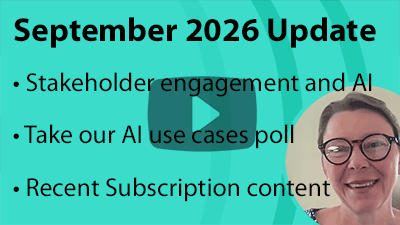
Read on the Blog:
September 2026 update
2nd September 2026
- Take our poll on AI use cases
8th September 2026 - September 2026 update
2nd September 2026 - All recent Subscription content
25th August 2026
- Jinfo Community session (TBC) (Community) 15th December 2026
- Jinfo Community session (TBC) (Community) 19th November 2026
- From AI use cases to implementation (Community) 22nd October 2026